September 5, 2026 · New View Landscaping
If your lawn came out of summer thin, patchy or full of weeds, September is the month to deal with it. Cool-season grass seed, which is what almost every lawn around Dubuque is made of, germinates best when the soil is still warm from summer but the air has started to cool off. That combination doesn't last long, and it doesn't come back until the following fall.
Spring seeding gets a lot of attention, but new grass planted in April and May has to survive a summer of heat and dry spells before it's established. Seed put down in September gets warm soil to sprout in, cooler days that don't scorch young blades, and far less competition from weeds, since most of the common ones are done germinating for the year.
The prep matters as much as the seed. Seed that lands on top of thatch or hard-packed soil mostly doesn't take. On lawns that are only a little thin, mowing short, raking out dead material and loosening the surface before spreading seed makes a big difference. On lawns with large bare areas, compacted ground or low spots, it's worth stripping the area, fixing the grade and bringing in fresh topsoil before anything goes down.
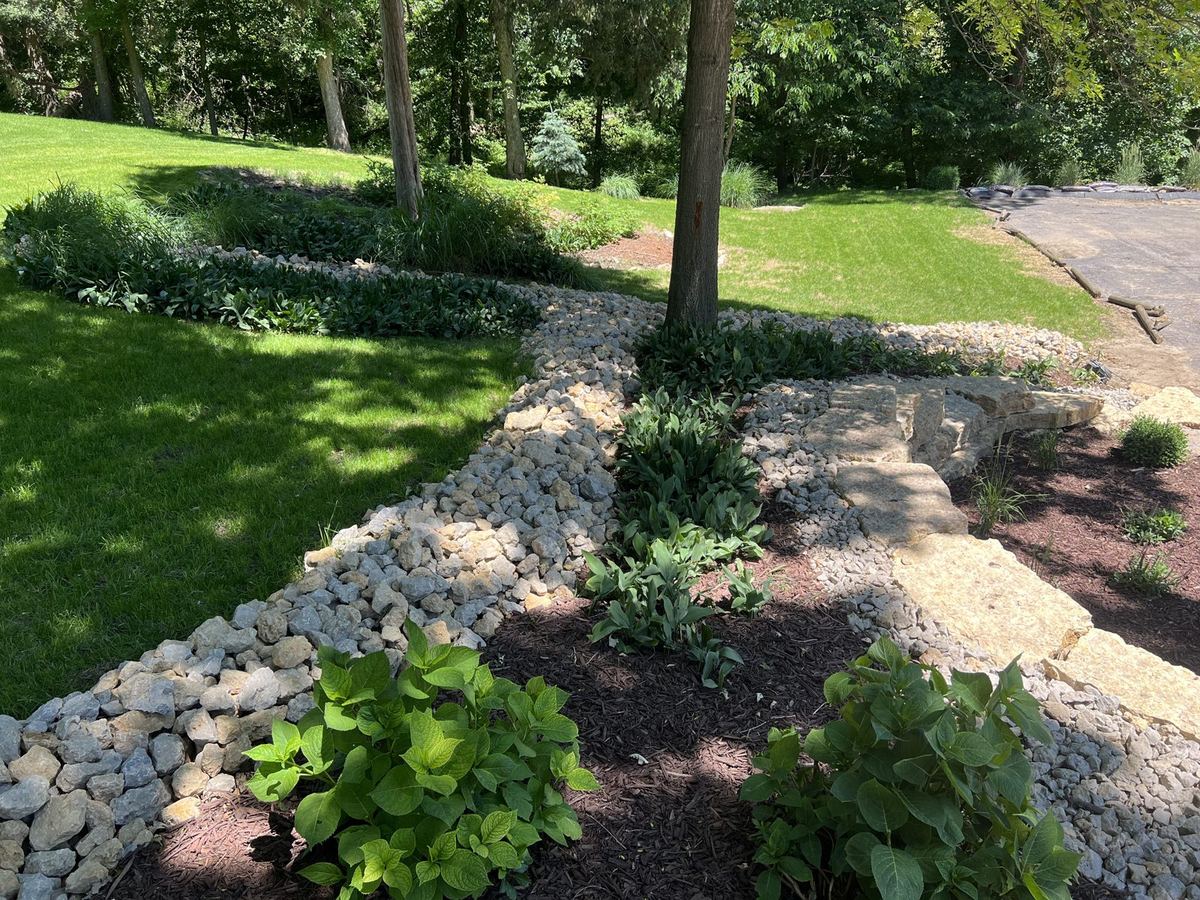
That's the part people skip, and it's usually why a lawn keeps failing in the same spot. If a section stays thin or soggy year after year, the problem is often grading or drainage, not the grass itself. Seeding over a low spot just means paying to reseed it again next year.
Once the seed is down, keep it consistently moist until it's up. That usually means light watering once or twice a day for the first couple of weeks rather than one deep soaking. Hold off on mowing until the new grass is a few inches tall, and keep heavy foot traffic and pets off it as much as you can.
The window runs out faster than most people expect. Seeding that goes down in late September has time to establish before the ground freezes. Seeding put down in late October or November often just sits there until spring. If you're not sure whether your lawn needs seed, a regrade or full sod, a quick walk-through is usually enough to tell.
Fix the grade first. Sod that lays flat and water that actually drains away from the house.
Learn MoreStanding water after every rain almost always traces back to grading, not sod. Here's how to tell the difference and what actually fixes it.
Every yard is different, so there's no honest flat-rate answer. Here's what actually moves the number up or down, so you know what you're looking at before you ask for a quote.
Most people have never gone through a full landscape project before and don't know what to expect. Here's the actual sequence, from the first walk-through to the last plant going in the ground.